
After more than two decades in thermal energy, sustainable technology solutions, and more recently Additive Manufacturing, I have come to an uncomfortable realization:
For much of my career, I misunderstood what sustainability meant to industry.
I believed sustainability meant reducing. Reducing fossil fuel consumption. Reducing resource extraction. Reducing emissions at the source.
Then I started engaging with large industries and senior leadership teams, and I encountered a different perspective.
For many organizations, sustainability is often approached as a balancing exercise. Emissions generated in one area are offset elsewhere through renewable energy investments, carbon credits, or other ESG initiatives. The overall sustainability metrics improve, but the underlying consumption patterns may remain largely unchanged.
This distinction became particularly evident when we introduced two technologies designed around direct reduction rather than offsetting.
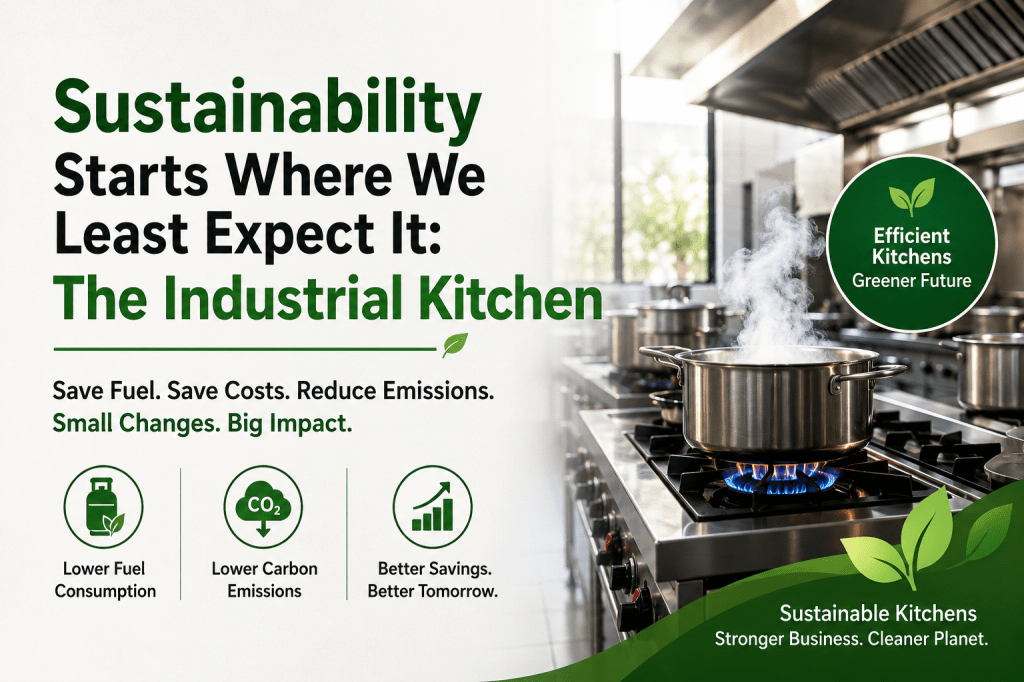
The first is a Make in India radiant cook stove that reduces LPG consumption by up to 40% through improved heat transfer efficiency. Less fuel consumed means less fuel extracted, transported, and burned.
However, many industrial canteens are now transitioning to electric cooking because renewable power is available within their energy portfolio. While electrification is an important pathway, the reality is that much of the grid continues to be supported by conventional power generation. The result is that the reported sustainability metrics improve, while the actual reduction achieved may be less straightforward than it appears.
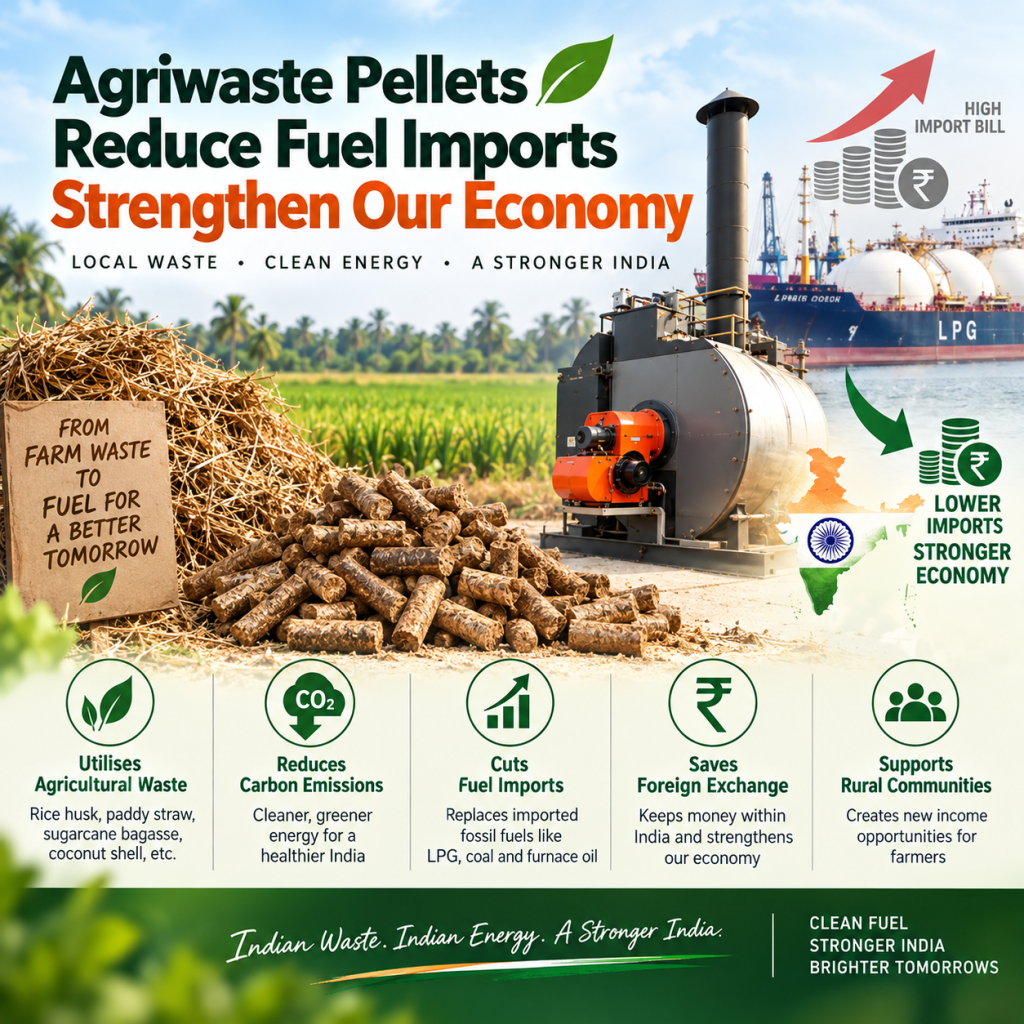
The second technology is a Make in India agri-waste pellet burner that replaces fossil fuels entirely with agricultural biomass that would otherwise be openly burned or discarded. It is not a reduction in fossil fuel dependence—it is a complete replacement.
Recognizing that capital investment is often a barrier, we offer both technologies on a lease model with full operations and maintenance included. No upfront capex. The investment is funded through the operating cost savings generated by the solution itself.
The economics work.
The emissions reduction is real.
The operational risk is managed.
Yet adoption remains slow.
This has led me to reflect on a simple principle: true sustainability begins with reducing harm before attempting to compensate for it.
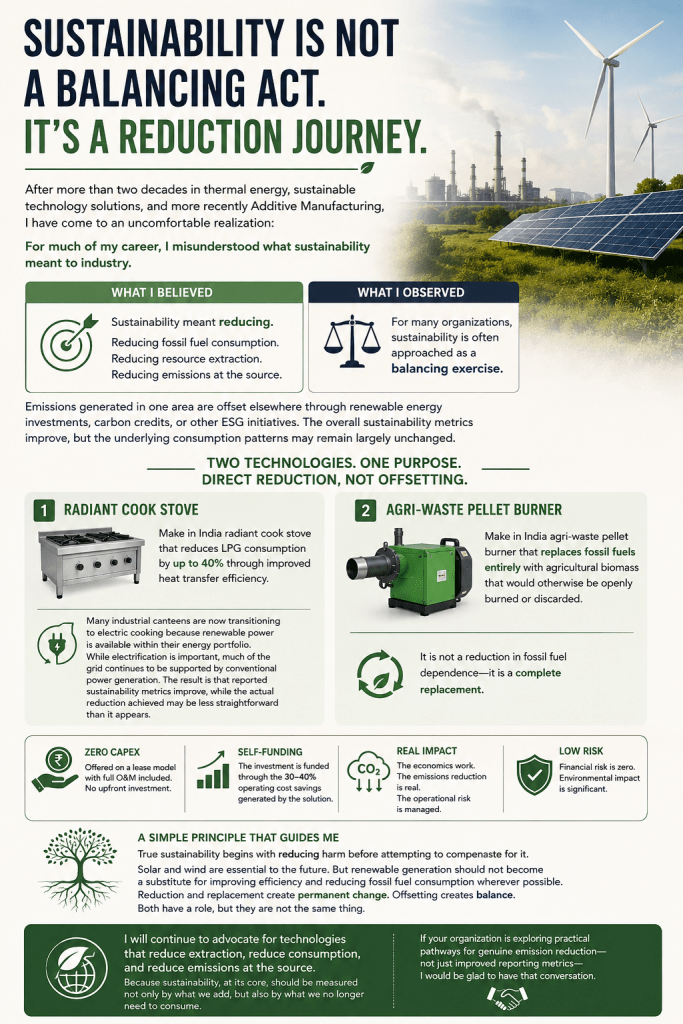
Solar and wind are essential to the future. But renewable generation should not become a substitute for improving efficiency and reducing fossil fuel consumption wherever possible.
Reduction and replacement create permanent change.
Offsetting creates balance.
Both have a role, but they are not the same thing.
I will continue to advocate for technologies that reduce extraction, reduce consumption, and reduce emissions at the source.
Because sustainability, at its core, should be measured not only by what we add, but also by what we no longer need to consume.
If your organization is exploring practical pathways for genuine emission reduction—not just improved reporting metrics—I would be glad to have that conversation.
– A Victim!!!
–


Leave a Reply