
One of the most abundant sources of energy available globally is solar energy. The Earth’s ecosystem literally runs on the Sun’s energy. Without it, life on Earth would not exist.
This raises an interesting question: how do places with less solar radiation still sustain life? The answer lies in the availability of resources. In high-altitude or low-sunlight regions, oxygen levels are lower and vegetation is sparse. The underlying reason is simple—less sunlight means fewer plants, which in turn means less oxygen production through photosynthesis.
All living beings are, directly or indirectly, dependent on sunlight. The oxygen we breathe is released by plants through photosynthesis, a process powered by sunlight. Without the Sun, the cycle of life would collapse.
Solar Energy in the Modern World
Today, solar energy is not only a natural necessity but also a global priority in the fight against climate change. It is at the center of major renewable energy discussions, and even international collaborations like the International Solar Alliance, initiated by India’s Prime Minister, Mr. Narendra Modi.
In India, solar energy contributes roughly 116 GW to our total power production. The industry itself is projected to reach USD 750 billion by 2029, showing its economic and environmental significance.
But does this massive growth in solar power actually help the environment? The answer is nuanced. Solar energy is carbon negative during manufacturing, but carbon positive during operation.
Carbon Emissions in Solar Panel Manufacturing
Like most industrial processes, solar panel manufacturing is energy intensive. It requires manpower, land, water, electricity, mining, and transportation—all of which contribute to carbon emissions:
Mining of raw materials (like silicon, silver, and rare earth elements) is a carbon-intensive process.
Transportation relies heavily on fossil fuels.
Electricity used in production often comes from non-renewable grids.
Supporting infrastructure (factories, logistics, packaging, etc.) adds to emissions.
This stage makes solar energy carbon negative, as more carbon is released than saved.
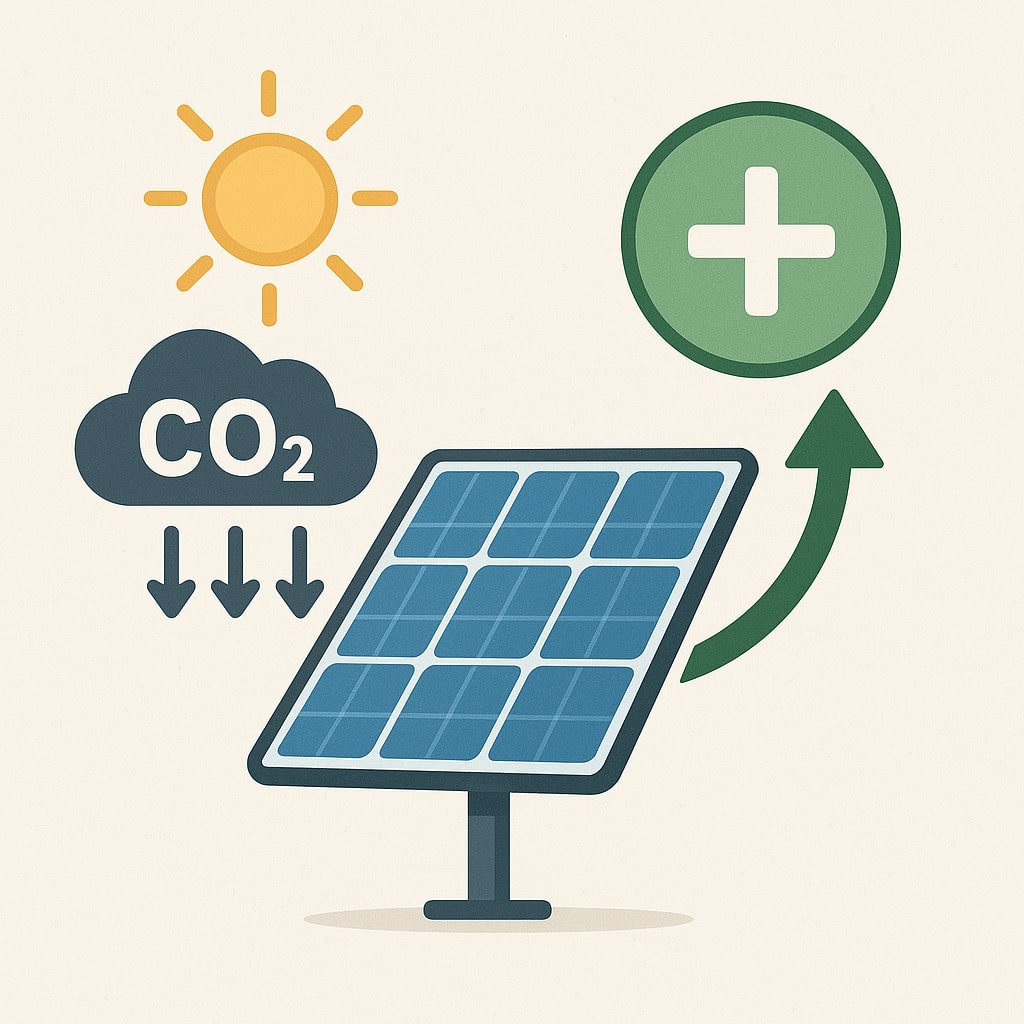
Carbon Emissions During Electricity Production
Once installed, however, solar panels generate electricity with very low carbon emissions—around 40g of CO₂ per kWh, compared to hundreds of grams from coal or natural gas.
Moreover, land used for solar farms can often be integrated into the circular economy (for example, combining solar farms with agriculture or grazing).
The carbon payback period—the time taken for a solar panel to offset the emissions from its own manufacturing—ranges from 1 to 4 years, depending on location and sunlight availability. In tropical regions, this period is shorter, making solar farms carbon positive more quickly.
Conclusion
While the manufacturing of solar panels does release carbon emissions, the long-term operation of solar energy systems is overwhelmingly positive for the environment. Over their lifespan, solar panels generate many times more clean energy than what was consumed in their production.
In short: Solar energy transitions from carbon negative to carbon positive, making it one of the most impactful renewable solutions for a sustainable future.


 navariTIE
Leave a comment